

Life and Times of Thirumoolar Part 2
Timeline Importance
It isn’t easy to pinpoint the time when Thirumoolar lived. Some scholars believe it is not relevant, but others agree that understanding works against its socio-cultural setting helps create depth of understanding. To gain an understanding of the social environment, we must have an idea of the time period.
That said, there are so many accounts of the timeline that it is hard to decipher. The best we can do without extensive research is to review a few sources.
Terms
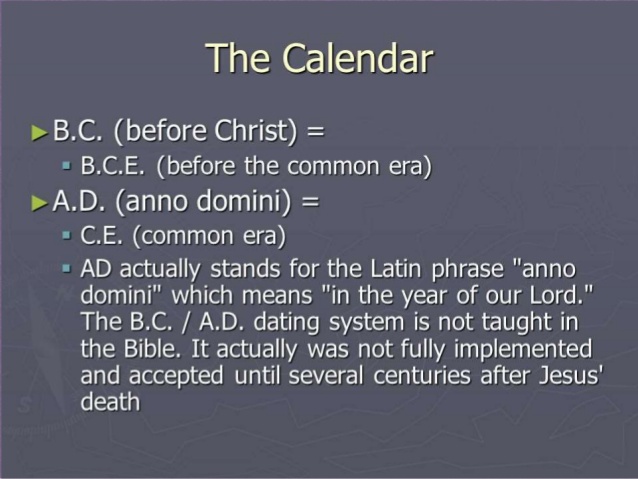
BCE or BC are “Before Common Era” or “Before Christ.” The common era is known as the Christian era.
CE or AD is “Common Era” or “Anno Domini” or “Year of Our Lord,” but people use “After Death” as the meaning of AD (after the death of Jesus). Still, other sources state that if we use BC for Before Christ and AD for After Death, the 33 years of Jesus lived do not count in either equation. Other scholars view it differently. It does not matter for our purposes because we look at a general timeline to feel for the time period.
Patanjali’s Timeline
Because most of us have studied Patanjali, it might help compare Thirumoolar’s timeline with Patanjali’s. Many scholars believe Patanjali lived between the 2nd century BCE to the 4th century CE. Most seem to lean toward a time period of 2nd and 4th century CE.
Thirumoolar’s Timeline
There are references that state Thirumoolar lived in the 8th century CE in Madurai, Tamil Nadu. My personal teacher believes this is probably the most accurate, but I’ll share other scholars’ views below.
Scholars like Sathiyavel Muruganar say that the period of Thirumoolar is 5,500 BC. Palur Kannappa Mudaliar, a Saiva scholar, says that Thirumoolar belonged to the 2nd century AD, and C.V. Narayana Ayyar fixes the period of his life between the 4th and 6th centuries AD.
Some scholars claim Thirumoolar was a contemporary Patanjali, meaning Thirumoolar would have lived within this same timeframe as Patanjali, but others disagree. Evidence that seems to uphold the view that they lived at the same time is not conclusive. Still, as scholar M. Govindan points out, more than 30 common philosophical ideas and coincidences among the Sutras and the Tirumandiram are unlikely. This seems to indicate they were contemporaries or had a common guru or lineage. However, as stated, this is not conclusive, and some scholars do not believe the 30 plus references of the same philosophical ideas are enough to state definitively that they were contemporaries.
Some scholars base their ideas on when Thirumoolar lived on mentions of his co-disciplines, Cidambaranar and Sathiyavel Muruganar, who believed they lived around 5,500 BC. Others, such as Vellaivaranar, fix the time period of Thirumoolar around the 5th to 6th century AD. They show how the phrases, words, and ideas of the Tirumandiram are used in the Tevearam, a compilation of verses of Appar, Sambandar, and Sundarar. This would put Thirumoolar living between the 5th and 6th centuries AD.
Obviously, we can find many conflicting timelines, but we can decide which timeline we believe is correct and how much it influences our work interpretation.
Learn more about our Thirumoolar’s Yoga Teacher Training Courses.